Attic ventilation basics every homeowner should know
Poor ventilation is the silent killer of roofs — it causes ice dams in winter, accelerates shingle aging in summer, and voids warranties you didn't know you had.
 By the Roofing Guide editors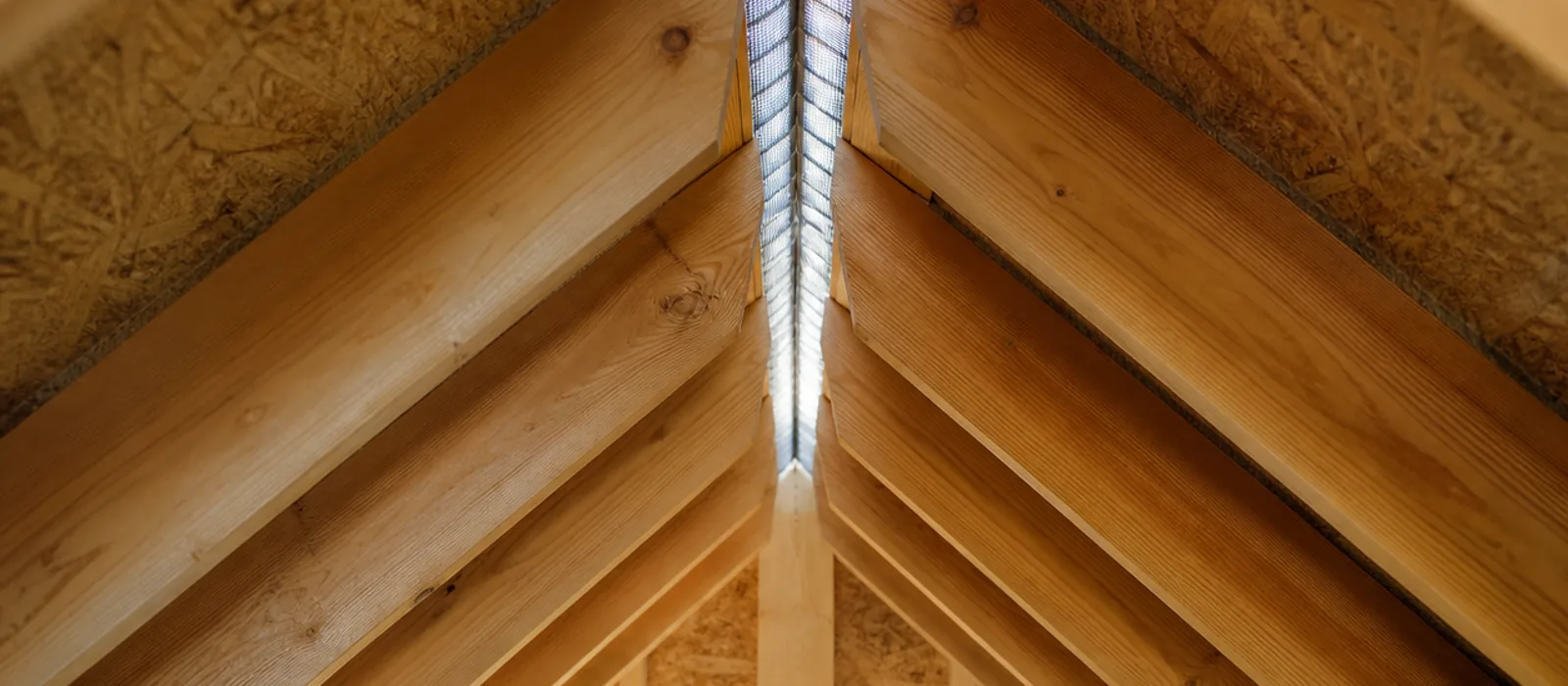
Ask most homeowners about their roof and they'll describe shingles. Ask a roofing contractor what actually makes a roof last, and they'll talk about ventilation. The space between your insulation and your sheathing needs to breathe — when it can't, everything above it suffers.
The physics are simple: warm, moist air rises from your living space into the attic. If it has nowhere to go, it does two things: in winter, it melts the underside of snow on the roof, which refreezes at the cold eaves as ice dams; in summer, it superheats the attic, cooking the shingles from below. Neither is good for the roof's lifespan — or your energy bill.
1. Intake and exhaust: the two halves of a ventilation system
Effective attic ventilation requires both intake air (cool air entering low, typically through soffit vents) and exhaust air (warm air exiting high, through ridge vents, box vents, or powered fans). Without both working together, you don't have ventilation — you have turbulence.
The most common failure mode is a well-installed ridge vent with blocked or missing soffit vents. Without intake, the ridge vent pulls air from the only source available: gaps in the attic floor around recessed lights, plumbing penetrations, and attic hatches — which bypasses insulation and drags conditioned air straight into the attic.
2. How much ventilation is enough?
The standard building code formula — derived from FHA guidelines — is the 1/150 rule: one square foot of net free ventilation area (NFA) for every 150 square feet of attic floor area. If at least 40% of that area is at the high exhaust position and 40% at low intake, you can use the more lenient 1/300 rule instead.
In practice, most older homes are under-ventilated. Soffits get blocked by blown-in insulation, original soffit vents are too small, or additions were built without adding venting proportional to the new attic area.
"Most shingle manufacturers require proper ventilation as a condition of the warranty. An under-ventilated attic can void coverage you've already paid for."
3. Signs you have a ventilation problem
- Ice dams in winter — the telltale ridge of ice at the eaves that sends water up under shingles. This is almost always a ventilation (and air sealing) problem, not a roofing problem.
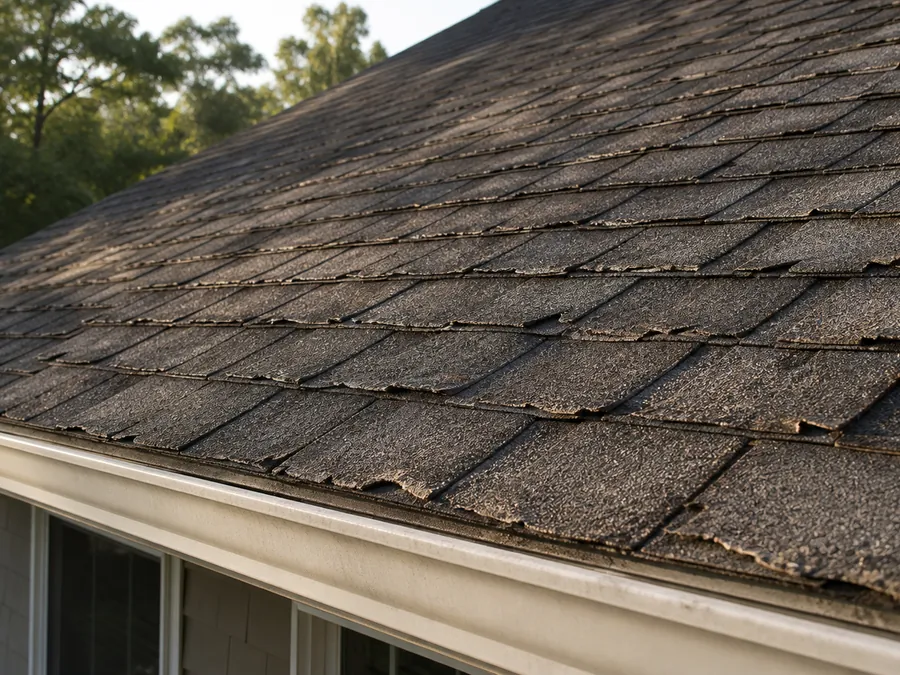
- Shingles aging faster than expected — if a 30-year shingle looks worn at 15 years, check attic temperatures. Excessive heat degrades the asphalt binder from below.
- High summer cooling bills — a superheated attic radiates heat into the living space. A properly vented attic can reduce attic temperatures by 20–40°F.
- Frost on the underside of sheathing in winter — moisture-laden air is condensing on the cold wood before it can escape. Over time this causes rot and mold.
- Attic insulation that's damp or compressed — moisture infiltration from poor ventilation is a common cause of insulation degradation.
4. What good ventilation looks like
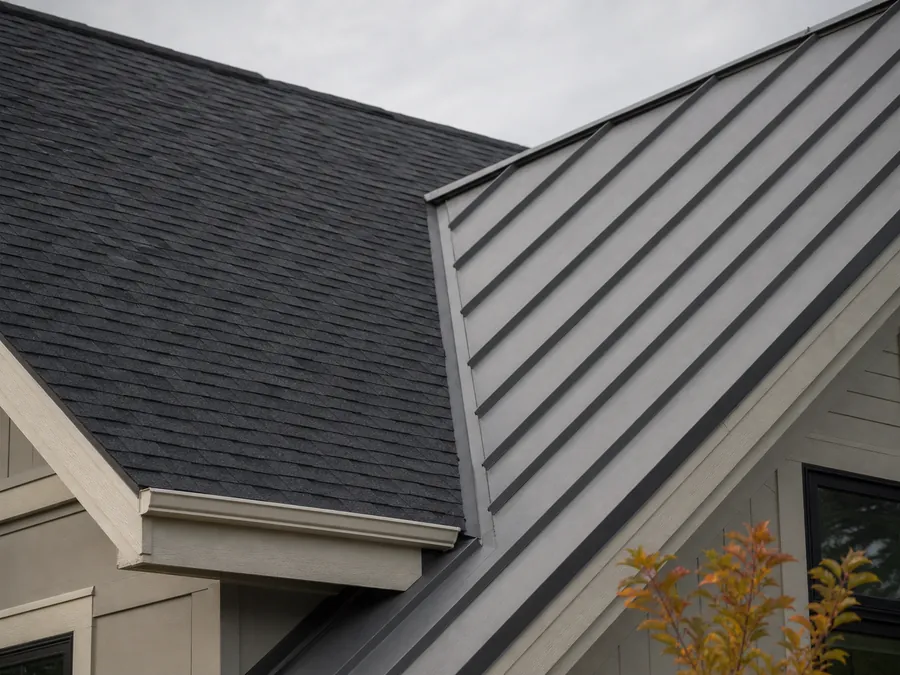
The current gold standard for residential ventilation is a continuous ridge vent paired with full-length perforated soffit vents. This creates a uniform airflow path along the entire length of the roof, with no hot spots. Box vents and turbines work, but they ventilate locally — a ridge vent ventilates the whole ridge.
Powered attic fans (PAVs) are controversial. They can pull conditioned air from the living space if the attic isn't well air-sealed, effectively cooling your attic at the expense of cooling your house. Passive ventilation with a well-balanced ridge-and-soffit system typically performs just as well without the risk.
If you're replacing a roof, this is the right time to address ventilation. The entire deck is exposed, and adding or upgrading vents mid-job costs a fraction of what it would as a standalone project.