What a new roof really costs in 2026
Labor, materials, and the hidden line items that surprise most homeowners — a realistic breakdown of what to budget before you call a contractor.
 By the Roofing Guide editors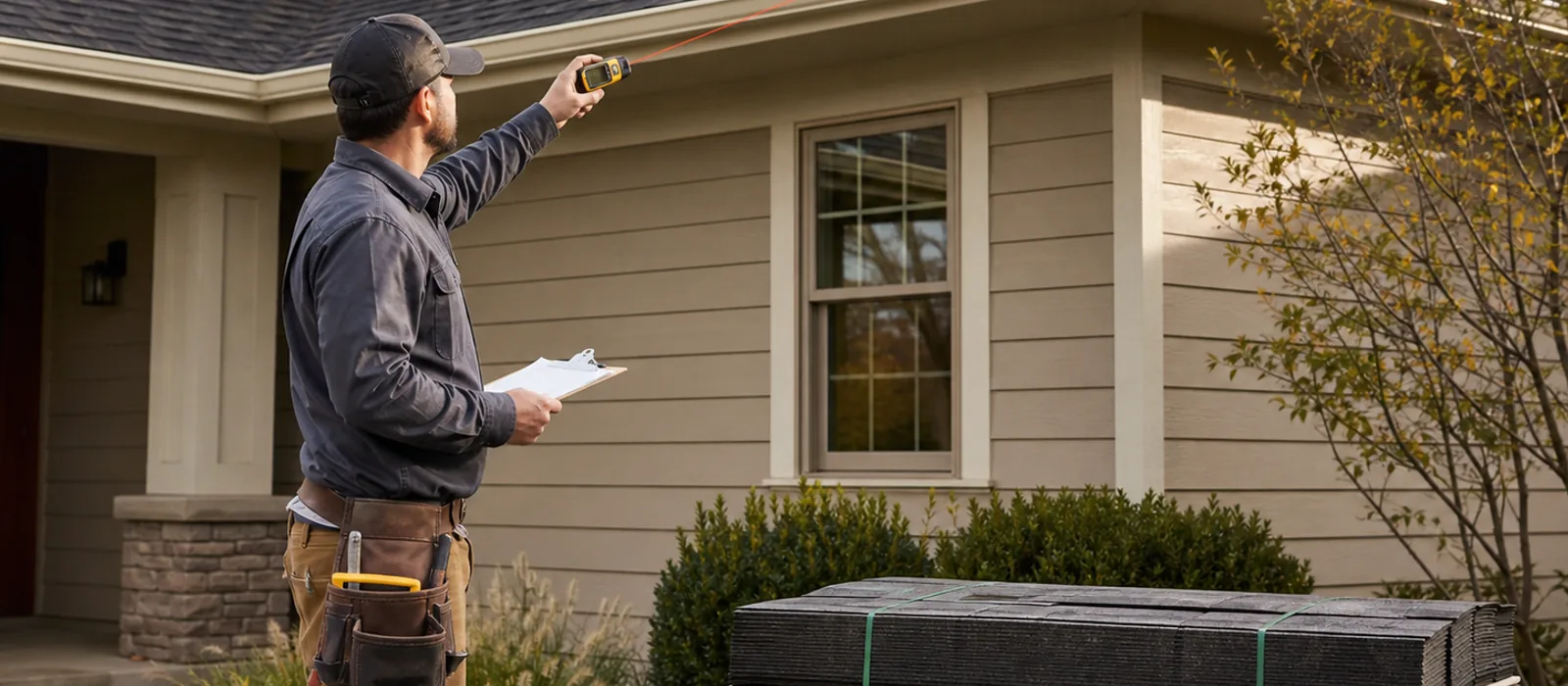
The number contractors quote is almost never the number you pay. Not because contractors are dishonest — most aren't — but because every roof hides things that can't be priced from the ground, and every job involves costs that homeowners don't think to ask about until the invoice arrives.
Here's a category-by-category breakdown of what goes into a roofing bill in 2026, plus the range you should expect depending on your region and material choice.
1. Materials
Materials typically account for 40–50% of a roofing estimate. For a 2,000-square-foot home (roughly 20–22 roofing squares after accounting for pitch and overhang), ballpark material costs in 2026 run:
- 3-tab asphalt shingles: $80–$110 per square
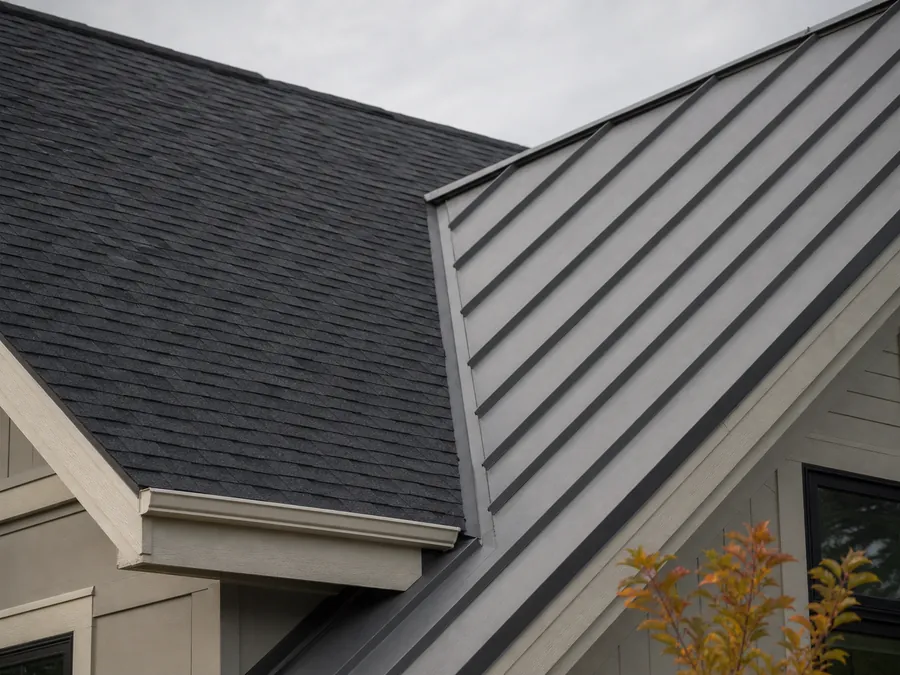
- Architectural (dimensional) asphalt: $110–$160 per square
- Impact-resistant (Class 4) asphalt: $160–$220 per square
- Standing-seam metal: $300–$600 per square
- Exposed-fastener metal: $160–$280 per square
These are materials only — add underlayment, ice-and-water shield, ridge caps, drip edge, and flashing, and the total material line typically runs 20–30% higher than the shingle price alone.
2. Labor — the biggest variable
Labor is the hardest line to benchmark because it varies dramatically by region, crew experience, and roof complexity. A simple, low-pitch gable roof on a single-story home takes far less time than a steep, multi-faceted hip roof with multiple valleys and penetrations.
As a rough national baseline for 2026, labor on a straightforward asphalt re-roof runs $150–$300 per square. In high-cost markets (coastal cities, major metros), $350–$500 per square for labor alone isn't unusual. In lower-cost rural markets, you may find crews at $100–$150 per square.
"Get three quotes — not to find the lowest number, but to understand why the numbers are different."
3. Hidden line items
These are the costs that generate the most homeowner surprise. Ask about each one explicitly before you sign anything:
- Permit: Most jurisdictions require a permit for full replacements. Cost ranges from $100 to $500+ depending on location. Some contractors pull it, some expect you to — confirm upfront.
- Tear-off and disposal: Removing the old roof typically adds $100–$150 per square. Some quotes include it, many don't.
- Decking repair: Once the old shingles come off, rotted or damaged sheathing gets replaced at $80–$120 per sheet of plywood. An older home might need several sheets; a neglected one might need considerably more.
- Flashing: If chimneys, skylights, or plumbing vents need new flashing, that's typically $200–$500 per penetration.
- Gutters: Some contractors won't guarantee their work if existing gutters are improperly pitched or clogged. You may be asked to address those before the roof job begins.
4. Getting a fair quote
Three quotes is the standard advice — and it's right, but not for the reason most people think. The goal isn't to find the cheapest contractor. It's to understand what's normal in your market so you can spot an outlier in either direction. A quote 40% below the others usually means something was left out. A quote 40% above may be padded, or it may reflect a crew that actually guarantees their work.
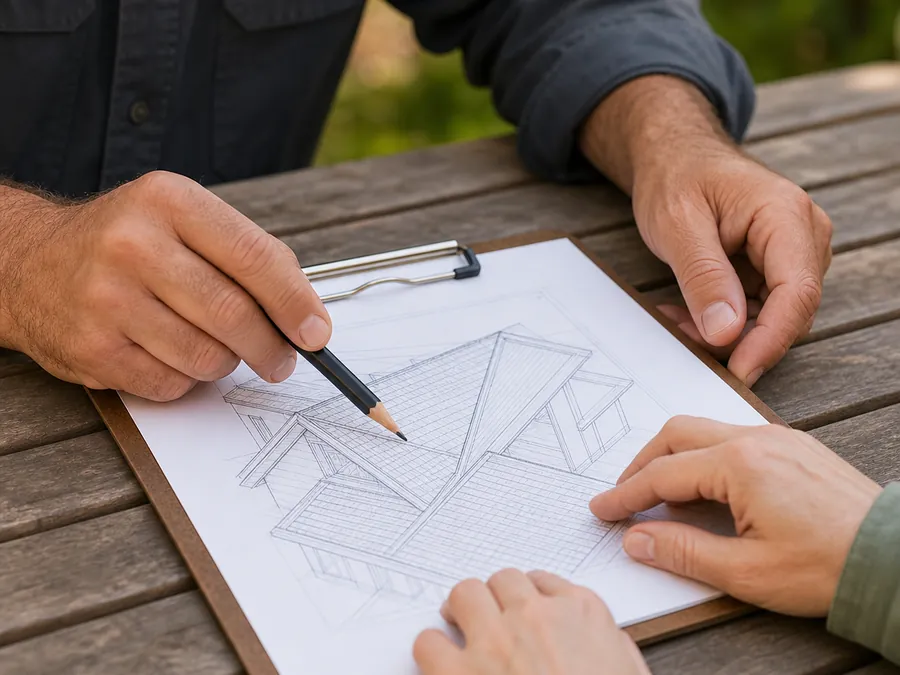
Ask each contractor to itemize: materials, labor, tear-off, permit, accessories. Comparing itemized bids tells you far more than comparing totals.
5. Financing and insurance
Most roofing contractors offer financing, and many partner with third-party lenders for 12–18 month deferred-interest plans. Be careful with deferred interest: if you don't pay the full balance before the promotional period ends, interest accrues from the original purchase date — often at 26–29% APR.
If storm damage is involved, your homeowner's insurance may cover all or part of the replacement. Document damage thoroughly with photos before any temporary repairs, file promptly, and get your own contractor assessment alongside the adjuster's — adjusters are not always conservative.