Best roofing materials for Western homes
From wildfire risk and intense sun to mountain snow and Pacific storms, the West packs several climates into one region — and each demands a different roof.
 By the Roofing Guide editors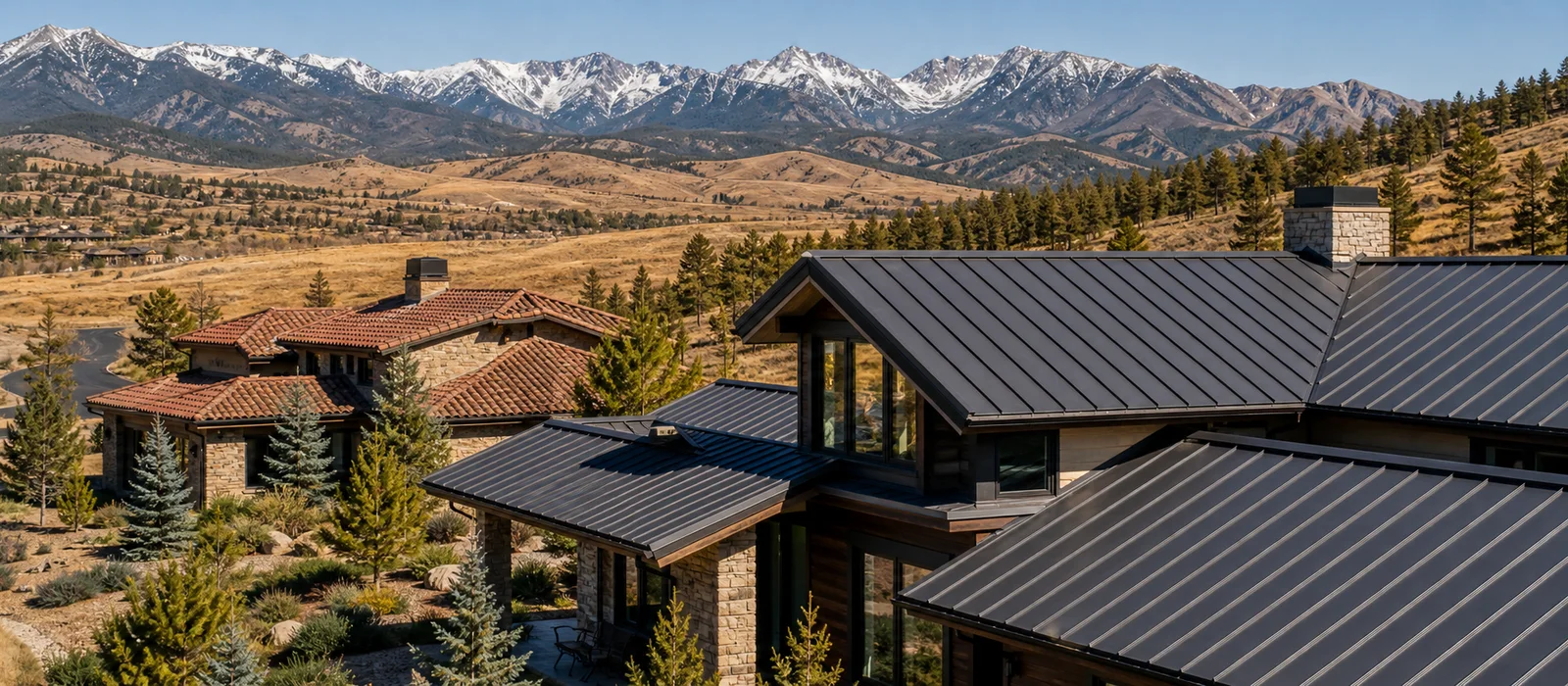
Wildfire risk makes fire-rated roofing essential across much of the West, while high-desert sun bakes and cracks lesser materials within years. Mountain areas contend with heavy snow, and the coast with wind-driven rain — so the "right" roof depends heavily on exactly where you live.
Metal
Standing-seam metal is Class A fire-rated as a full assembly, sheds mountain snow load efficiently, and reflects intense high-desert sun rather than absorbing it. It performs well across nearly every Western sub-climate, which is why it's become the default recommendation for wildfire-interface areas.
Clay and concrete tile
Tile is the classic choice across the Southwest for a reason: it's inherently fire-resistant, shrugs off decades of direct sun without degrading, and has an exceptionally long service life. It's heavier than metal or asphalt, so deck capacity should be confirmed, and it's better suited to drier climates than areas with heavy, wet mountain snow.
Class A asphalt
Where metal or tile isn't in the budget, a Class A fire-rated asphalt shingle (achieved through the assembly, including underlayment) is the minimum standard in any wildfire-prone area — many local codes require it outright. Choose a UV-resistant formulation, since standard shingles degrade quickly under sustained high-altitude or desert sun.
Match the material to your sub-climate
- Wildfire-interface areas — prioritize a Class A-rated assembly and noncombustible components (metal or tile) over cosmetics.
- High-desert and inland valleys — prioritize UV resistance and reflectivity to manage sun exposure and cooling costs.
- Mountain and high-snow elevations — prioritize steep pitch and a material that sheds snow rather than holding it.
- Coastal areas — prioritize wind rating and corrosion-resistant fasteners against salt air and wind-driven rain.
Because the West spans desert, mountain, and coast, the single most useful question isn't "what's the best roofing material" — it's "what's the best material for my specific micro-climate and fire risk."