Best roofing materials for Northeast homes
Freeze-thaw cycles, heavy snow load, and coastal storms make the Northeast one of the toughest environments on a roof in the country. Here's what actually holds up.
 By the Roofing Guide editors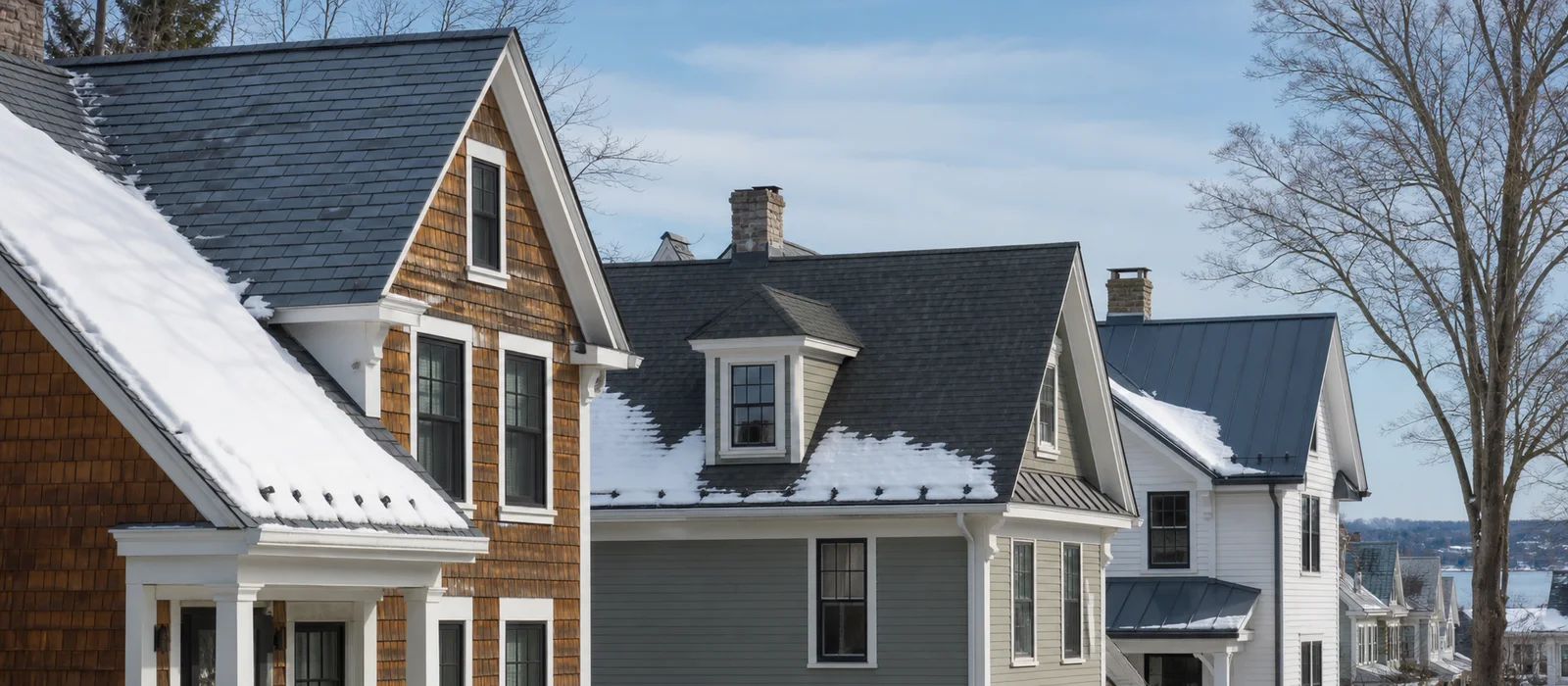
Winters here punish anything that traps water. When snow melts and refreezes at the eaves, ice dams force water back up under the shingles — a leading cause of interior leaks across the region. Whatever material sits on top, the assembly underneath has to handle that cycle without failing.
Slate
Slate is the traditional choice on older New England homes for a reason — it's essentially immune to freeze-thaw damage and can outlast the house it's on, often 75–100+ years. The trade-offs are cost and structural weight; not every roof deck is built to carry it without reinforcement, and repairs require a specialist who works in slate specifically.
Asphalt shingles
Architectural asphalt remains the most common Northeast roof for good reason: reasonable cost, wide contractor availability, and — when paired with proper ice-and-water shield along the eaves — solid ice dam resistance. Look for a cold-weather-rated shingle and confirm the installer is using self-adhering underlayment at least 3 feet up from the eave, more on low-slope sections.
Metal
Standing-seam metal sheds snow instead of holding it, which sidesteps the ice dam problem almost entirely on steep pitches. It's a strong fit for saltbox and farmhouse-style roofs common in the region. The upfront cost is higher than asphalt, but a 40–70 year lifespan and minimal maintenance often make it the better long-run number.
What to prioritize regardless of material
- Steep pitch where possible — snow and water shed faster, reducing dwell time against the roof surface.
- Ice-and-water shield at eaves and valleys — non-negotiable in this climate regardless of what's on top.
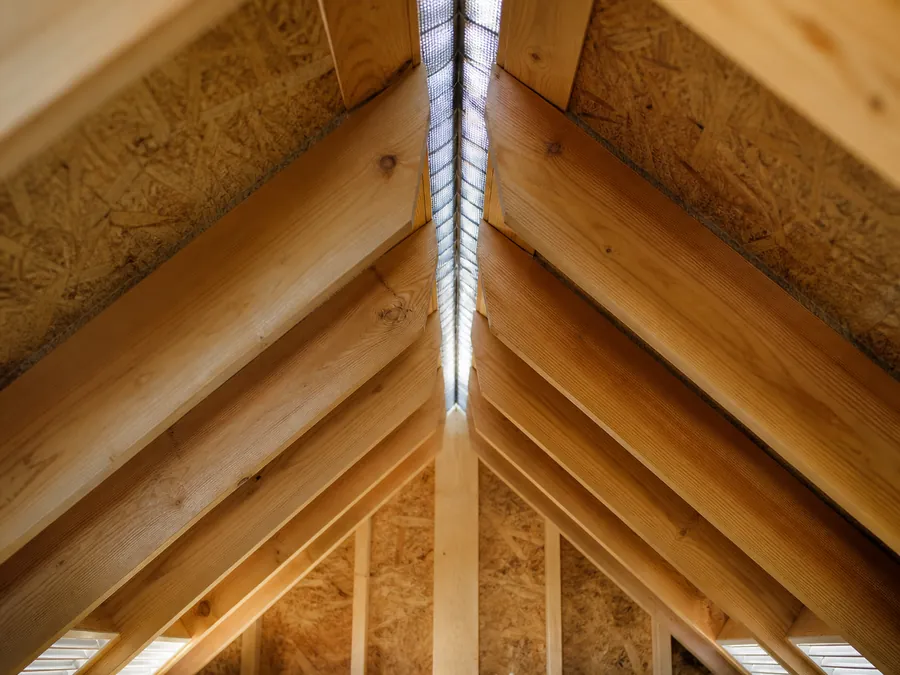
- Balanced attic ventilation — an under-ventilated attic is what turns melting snow into an ice dam in the first place.
The right call usually comes down to roof pitch and budget: steep pitches with the budget for it do best in metal or slate, while moderate pitches on a tighter budget are well served by a cold-climate asphalt shingle installed with proper ice protection.