Northeast seasonal roof
maintenance checklist
Ice dams, freeze-thaw cycles, and coastal storms make the Northeast one of the hardest places on a roof in the country. This checklist keeps you ahead of all of it, season by season.
 By the Roofing Guide editors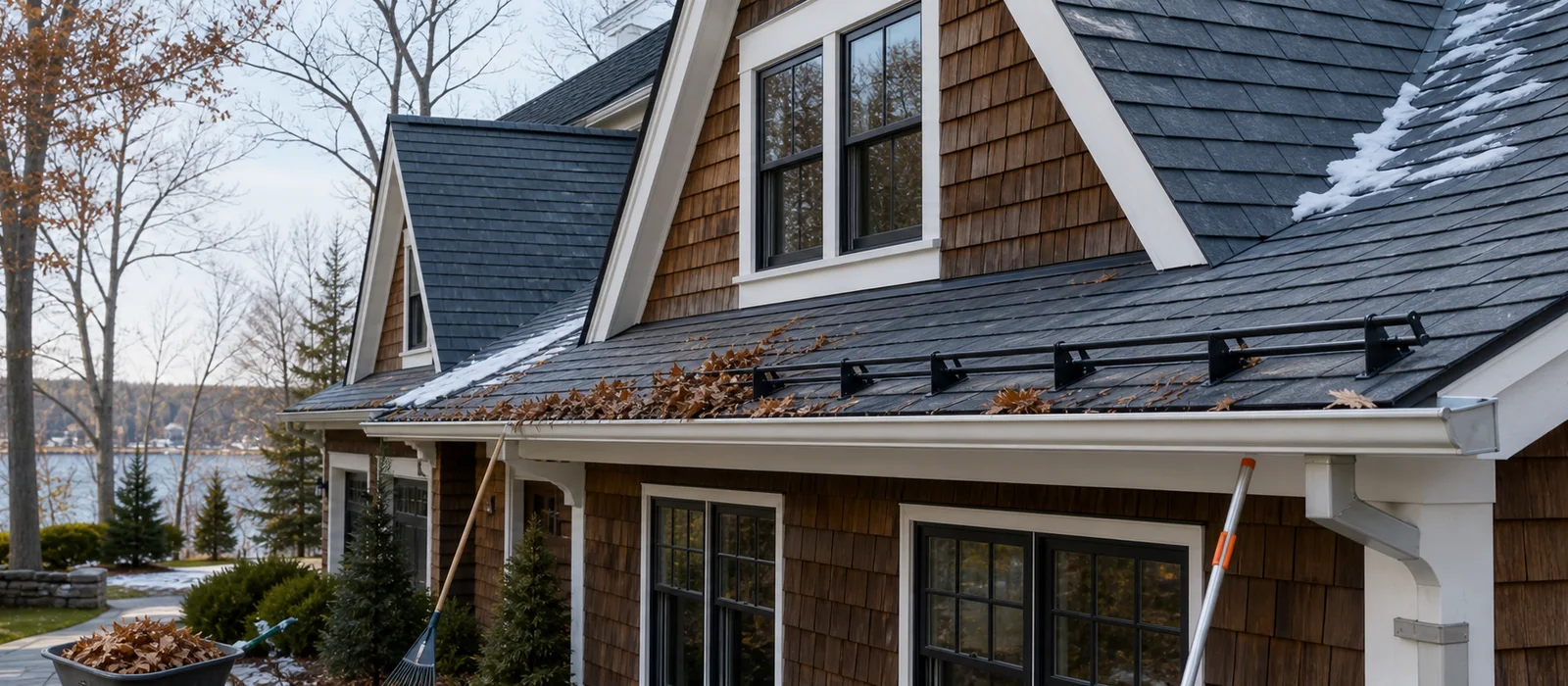
Northeast winters don't forgive neglect. A roof that's in good shape going into November is an asset; one with a loose flashing or clogged gutter becomes a liability the first time temperatures swing between 38°F and 12°F in the same week. This checklist is built around the region's actual seasonal rhythm — not a generic national template.
Fall (September – November)
This is your most important maintenance window. Everything you do in fall is an investment against winter damage.
- Clean gutters and downspoutsLeaves clog gutters fast in October. A blocked gutter is where ice dams begin — water backs up, freezes, and forces its way under shingles. Clean once in mid-October and again after peak leaf fall.
- Inspect attic insulation and ventilationInadequate insulation lets heat escape through the roof deck, which melts snow unevenly and seeds ice dams. You want at least R-49 in most Northeast attics. Check that soffit vents and ridge vents are unobstructed.
- Check flashing at every penetrationChimneys, skylights, pipe boots and wall intersections are where leaks start. Look for cracks in the sealant, lifted metal, or rust. Fall is the time to caulk and re-seal — not February.
- Trim overhanging branchesA branch loaded with ice weighs far more than the same branch in summer. Remove anything within 10 feet of the roof surface before the first ice event.
- Inspect shingles across all slopesLook for curled edges, cracked tabs, or missing granules — signs the shingles will struggle through another freeze-thaw season. A marginal shingle in October is a leak source in March.
- Test attic hatch sealsAn unsealed attic hatch is a direct heat-escape path. A simple foam gasket can make a measurable difference in preventing ice dam formation at the eaves.
Winter (December – February)
Active monitoring season. You're watching for ice dams and assessing snow load after major events.
- Monitor snow accumulation after heavy eventsMost residential roofs are designed for 40–60 lbs per square foot, but wet, heavy snow can exceed that quickly. If you receive more than 18–24 inches of heavy snow, use a long-handled roof rake from the ground to clear the lower 4 feet of each slope.
- Watch for icicles as ice-dam indicatorsSmall icicles at the eaves are normal. Unusually large icicles, or icicles that form mid-slope rather than at the edge, signal that meltwater is pooling behind a dam. That's the leak risk, not the icicle itself.
- Never chip at ice dams with toolsChipping is how shingles and flashings get damaged. If a dam is causing active leakage, call a professional to steam-remove it. Calcium chloride sock treatments placed on top of the dam (not rock salt) can slow formation overnight.
- Check the attic after major stormsAfter any significant snow event, spend 5 minutes in the attic with a flashlight. Any daylight, dripping, or fresh moisture on the sheathing means water found a way in and needs immediate attention.
"Ice dam damage is almost always preventable — and almost always traced back to something that could have been fixed in October."
Spring (March – May)
Damage assessment season. Winter leaves a specific pattern of failures — here's what to look for.
- Full post-winter shingle inspectionFreeze-thaw cycles crack and lift tabs in ways that aren't visible until snow cover is gone. Walk the perimeter and use binoculars to check every slope for lifted corners, cracked surfaces, or bare patches where granules washed away.
- Check for flashing movementRepeated freeze-thaw cycles work metal flashings loose from their sealant and mortar beds — especially at the chimney. Run a gloved finger along every flashing joint and look for gaps or raised edges.
- Clean gutters post-meltAfter ice dam season, gutters often hold sand, grit, and granules that washed off the shingles. Clear them fully, check all brackets are still secure, and confirm downspouts are draining away from the foundation.
- Inspect the attic for moisture damageAfter ice dam season, stains on rafters or sheathing reveal water that was briefly inside. Assess whether any insulation got wet and needs replacing — wet insulation loses its R-value and promotes mold.
- Schedule a professional inspection if warrantedIf you had visible ice dams, interior leaks, or heavy snow loading this winter, a professional inspection now — before the damage compounds — is a sound investment.
Summer (June – August)
Lower risk but not no risk. A few things are worth catching before they become fall problems.
- Treat algae and moss on north-facing slopesBlack algae streaks are common on shaded slopes across the Northeast. They don't immediately damage shingles but trap moisture and accelerate granule loss. A zinc or copper strip at the ridge releases ions that inhibit regrowth after rain.
- Inspect sealants and pipe boot gasketsUV and heat cycles dry out sealants. Summer is ideal for recaulking any cracked joints around penetrations before fall rains arrive.
- Clear vegetation from valleys and guttersSeedlings can take root in accumulated debris in roof valleys and gutters. Pull them now before roots cause damage.
- Note anything marginal for fall actionIf you spot a shingle that's not failing yet but looks close, flag it. Fall is when you want to act — not mid-winter.