Midwest seasonal roof
maintenance checklist
Hail, high winds, and temperature swings that span 100°F across the year — the Midwest is tough on roofs. This checklist keeps you on top of the threats that matter most in your region.
 By the Roofing Guide editors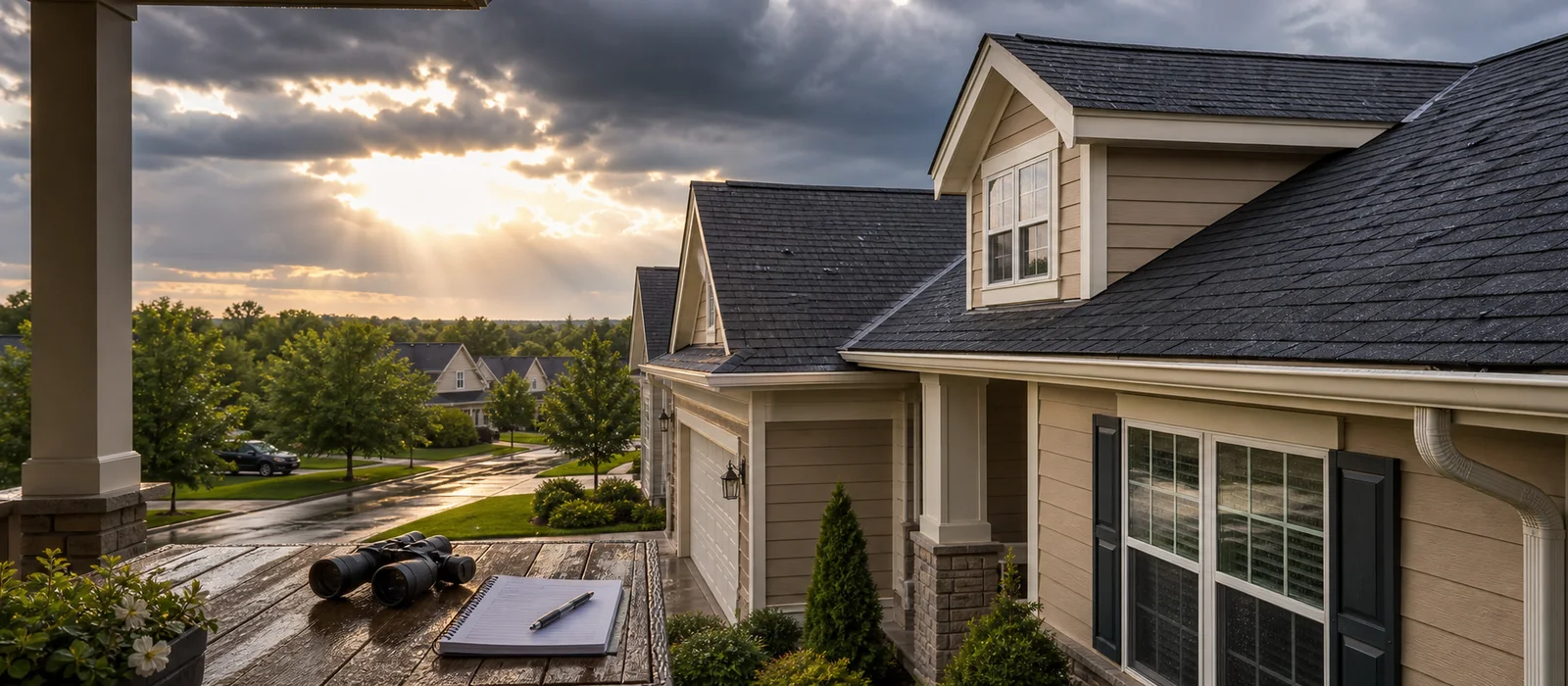
The Midwest's biggest roofing threat arrives fast and leaves quietly. A hailstorm that lasts 20 minutes can set up thousands of dollars in damage that won't cause a leak for another 12–18 months — long after most insurance claim windows have closed. The checklist below is built around that reality, plus the steady attrition of freeze-thaw cycles and severe seasonal temperature shifts.
Spring (March – May)
The winter is done; storm season is coming. Two inspections belong on your calendar this month.
- Post-winter damage inspectionEven mild Midwest winters produce enough freeze-thaw cycling to crack caulk, lift flashing, and work loose tabs free. Walk the perimeter and scan every slope with binoculars. Pay attention to the north slope — it holds ice and moisture longest.
- Clear gutters after spring thawWinter debris — sediment, shingle granules, leaf fragments — settles in gutters after the melt. Flush them now so they're ready for spring rain events. Check that all gutter hangers survived the ice weight.
- Schedule a professional pre-storm-season inspectionBefore June, have a roofer look at the condition of your shingles and flashings. If anything is marginal, it's far better to repair it before a hailstorm than to file a claim on a pre-existing condition.
- Check attic ventilation before summer heat buildsThe Midwest's hot, humid summers can bake a poorly ventilated attic to 160°F+, which degrades shingles from below as fast as weather attacks from above. Confirm ridge and soffit vents are clear.
Summer (June – August)
Peak hail and severe-storm season. Your response in the 48 hours after a storm matters as much as anything else on this list.
- Inspect from the ground within 48 hours of a hailstormLook for dented gutters and downspouts (hail leaves distinct round dimples), bare spots on shingles where granules were knocked off, and any lifted or missing tabs. Check HVAC vents and caps on the roof — hail damage to soft aluminum is an early indicator.
- Check gutters for granule accumulationA heavy granule flush after a storm — far more than you'd see from normal weathering — confirms that the hailstorm removed surface coating from your shingles. Document with photos and contact your insurer within the claim filing window for your policy (often 1 year from the event).
- Document everything before any temporary repairsIf you need to tarp a damaged section, photograph the full roof first. Date-stamped photos are your primary evidence in a claim. Insurers can and do deny claims when repairs are made before the adjuster sees the damage.
- Monitor ventilation through heat wavesIf attic temperatures are consistently extreme (you can feel intense heat through the hatch), your ventilation is inadequate. Excessive heat cooking shingles from below contributes to the cracking and brittleness that makes hail damage far worse.
"Most Midwest homeowners miss the hail claim window not because the damage wasn't there — but because they didn't look for it in time."
Fall (September – November)
Your annual comprehensive maintenance window before winter locks you out of the roof.
- Annual full inspection — professional or thorough DIYLook at every slope, every flashing joint, every ridge cap. This is the time to catch anything storm season left behind and anything that's been quietly degrading.
- Thorough gutter cleaningThe Midwest's heavy deciduous canopy fills gutters fast in October. Blocked gutters cause water to back up against fascia and soffit, and contribute to ice buildup at the eaves once temperatures drop.
- Check all caulk and sealant jointsEvery pipe boot, vent cap, and flashing edge relies on sealant. Midwest temperature swings dry and crack sealants faster than in milder climates. Fall is the last comfortable window to recaulk before winter.
- Trim overhanging branchesWind-driven ice storms regularly bring branches onto roofs. Remove anything with a clear path to the roof surface before the first major winter storm.
- Confirm fastener integrity on metal panels and accessoriesIf you have metal flashings, ridge caps, or panels, check that screws and clips haven't backed out through seasonal expansion and contraction. Backed-out fasteners create direct leak paths.
Winter (December – February)
Monitoring season. Midwest winters are less severe than the Northeast on average, but wind events require prompt attention.
- Inspect after major wind eventsHigh straight-line winds and derecho storms are common across the Plains in winter. After any event with sustained winds above 50 mph, scan the roof from the ground for lifted tabs or missing shingles — especially on the windward slope.
- Check the attic after significant temperature dropsA dramatic cold snap following a mild stretch can reveal flashing gaps and sealant failures that were invisible at moderate temperatures. A quick attic flashlight check after a hard freeze costs five minutes.
- Keep gutters clear of ice buildup where possibleUnlike the Northeast, most Midwest homes don't contend with prolonged ice dam formation — but short ice events around freeze-thaw cycles can still produce gutter blockages. Clear what you safely can from the ground after a thaw.